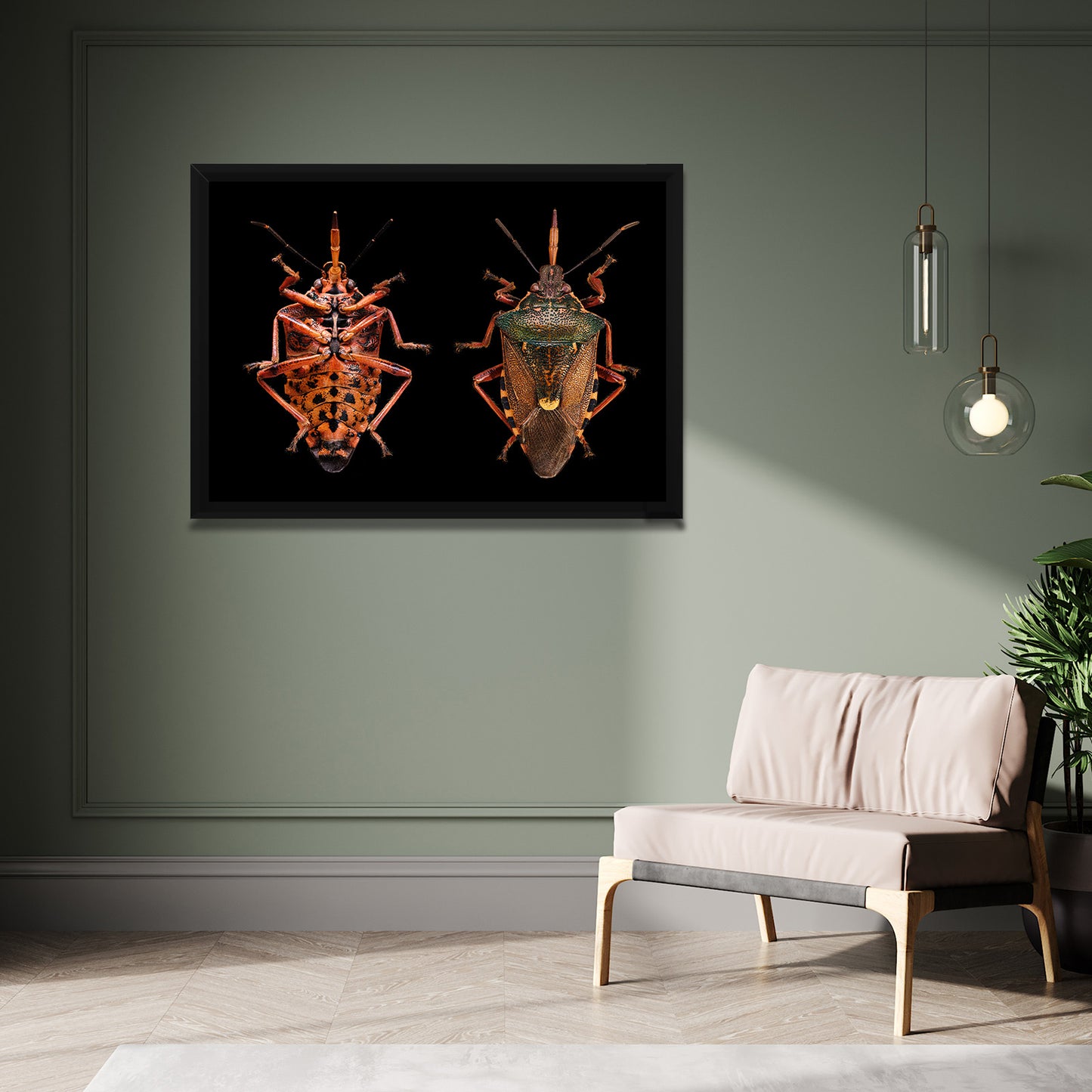
This quite rare stink bug, Pinthaeus sanguinipes, can reach a length of 13–17 millimetres (0.51–0.67 in). These stink bugs overwinter as adults, females lay their eggs in May and the adults are present from August. Adults of these red-legged bugs prey on other insect and they mainly feed on the larvae of beetles, sawflies and butterflies.
Stink bugs get their name from the unpleasant odor they release when threatened. The scent is a deterrent to predators and can linger in the area, serving as a warning to potential threats. The defensive secretion of stink bugs contains chemicals that can cause irritation to predators, and in some cases, to humans. It's advisable to handle them with care to avoid contact with this fluid. Stink bugs are intriguing insects with a combination of beneficial and nuisance aspects. While some species contribute to natural pest control, others can be problematic for agriculture. Their unique defense mechanism and diverse characteristics make them a subject of interest in entomology.